
On a vintage sukajan, the front zipper can be an important dating clue. It is not, however, a manufacturing-date stamp. A pull marked TTS, SPEED or YKK must be read together with the slider, teeth, tape, lower box, stitching, fabric and embroidery.
Why reversible sukajan need a special slider
Many sukajan are reversible, so the zipper must be operable from either face. Two structures are especially important.
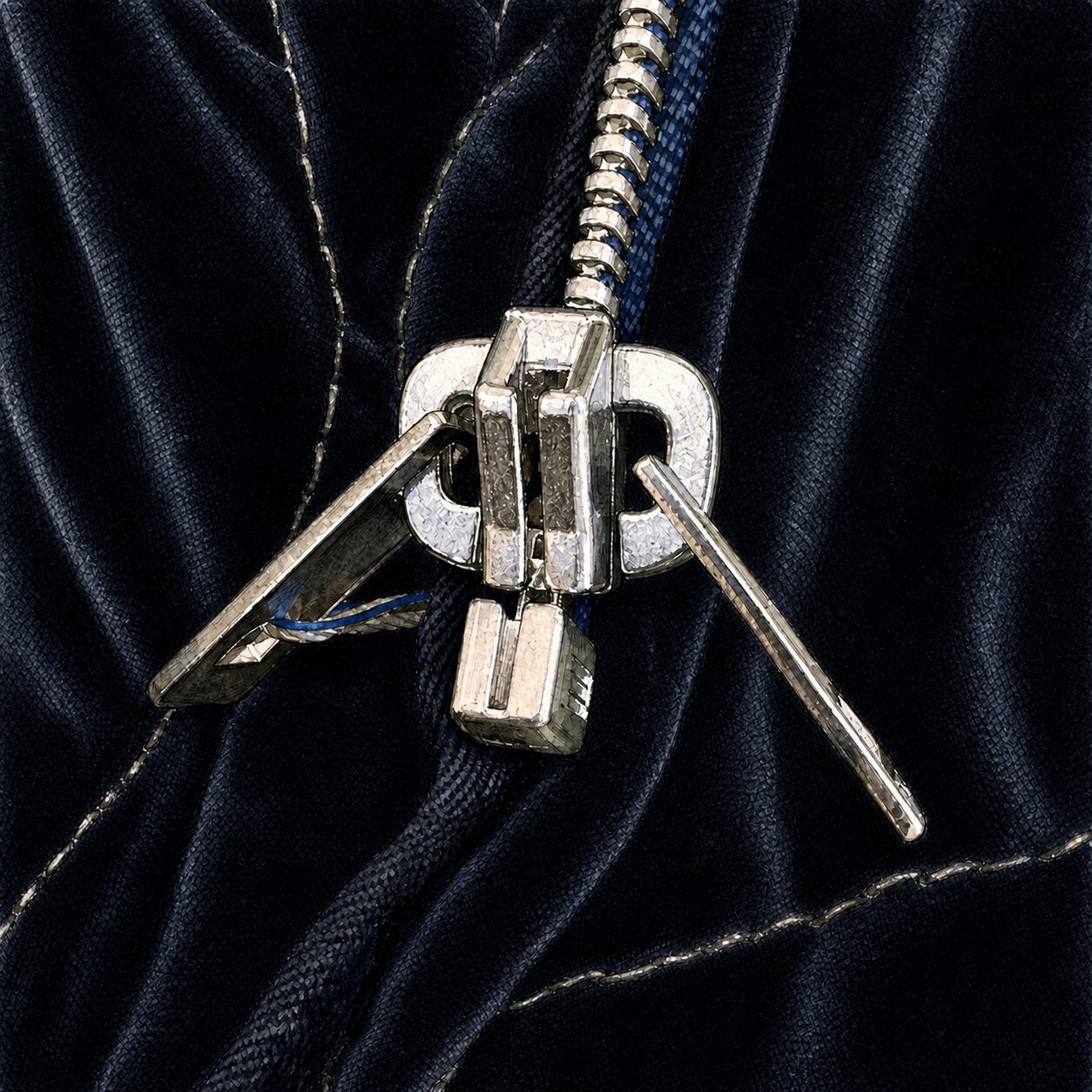
Butterfly zipper
This form has a pull on each side of the slider. The two pulls resemble wings, which led vintage dealers and reproduction makers to call it a “butterfly” zipper.
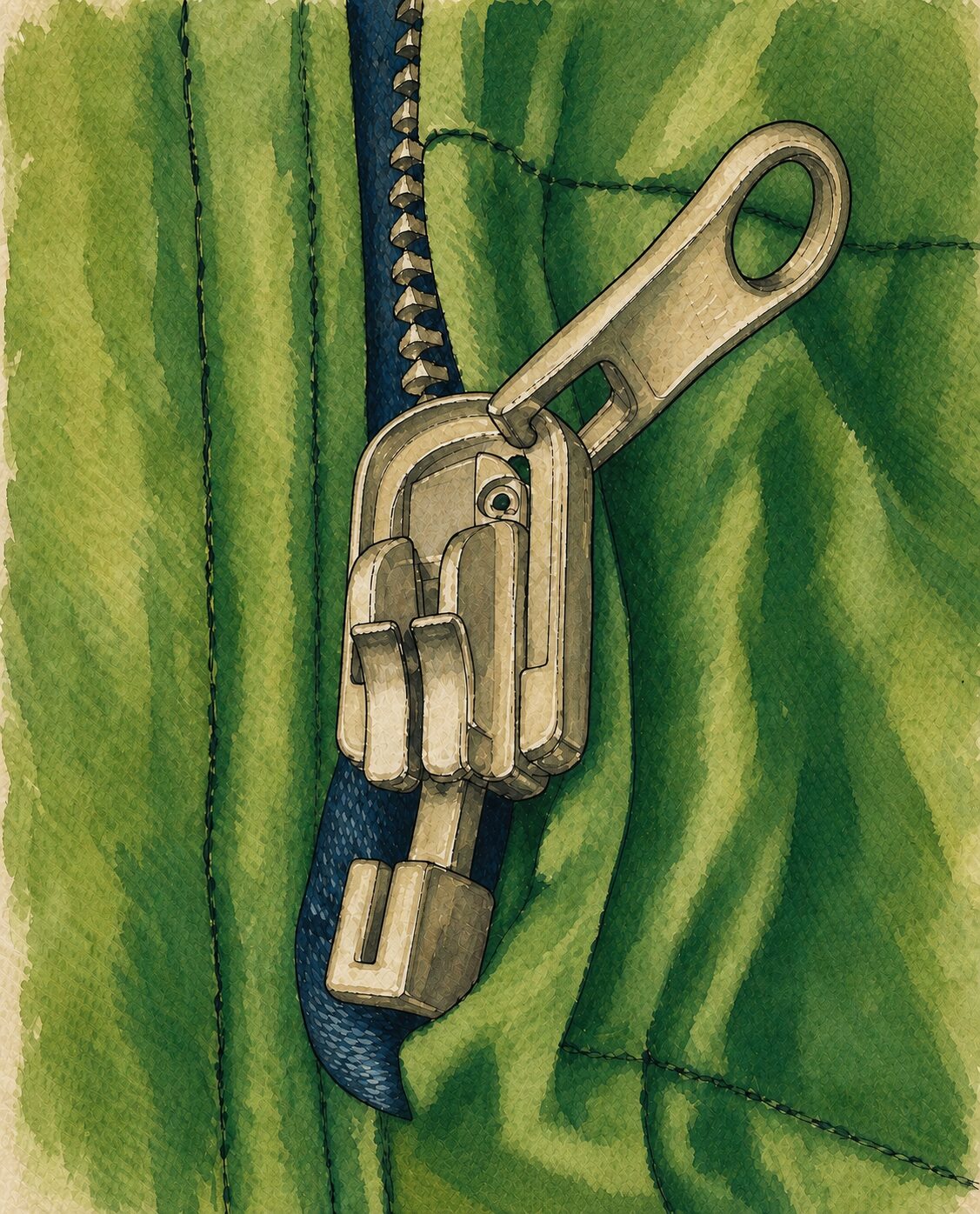
Rotating or reversible slider
This type uses one pull that travels or rotates to the opposite face. YKK’s current technical terminology describes comparable forms as reversible sliders. Both systems occur in more than one period and from more than one maker, so the mechanism alone does not establish age.
Inspect the complete zipper, not only the pull
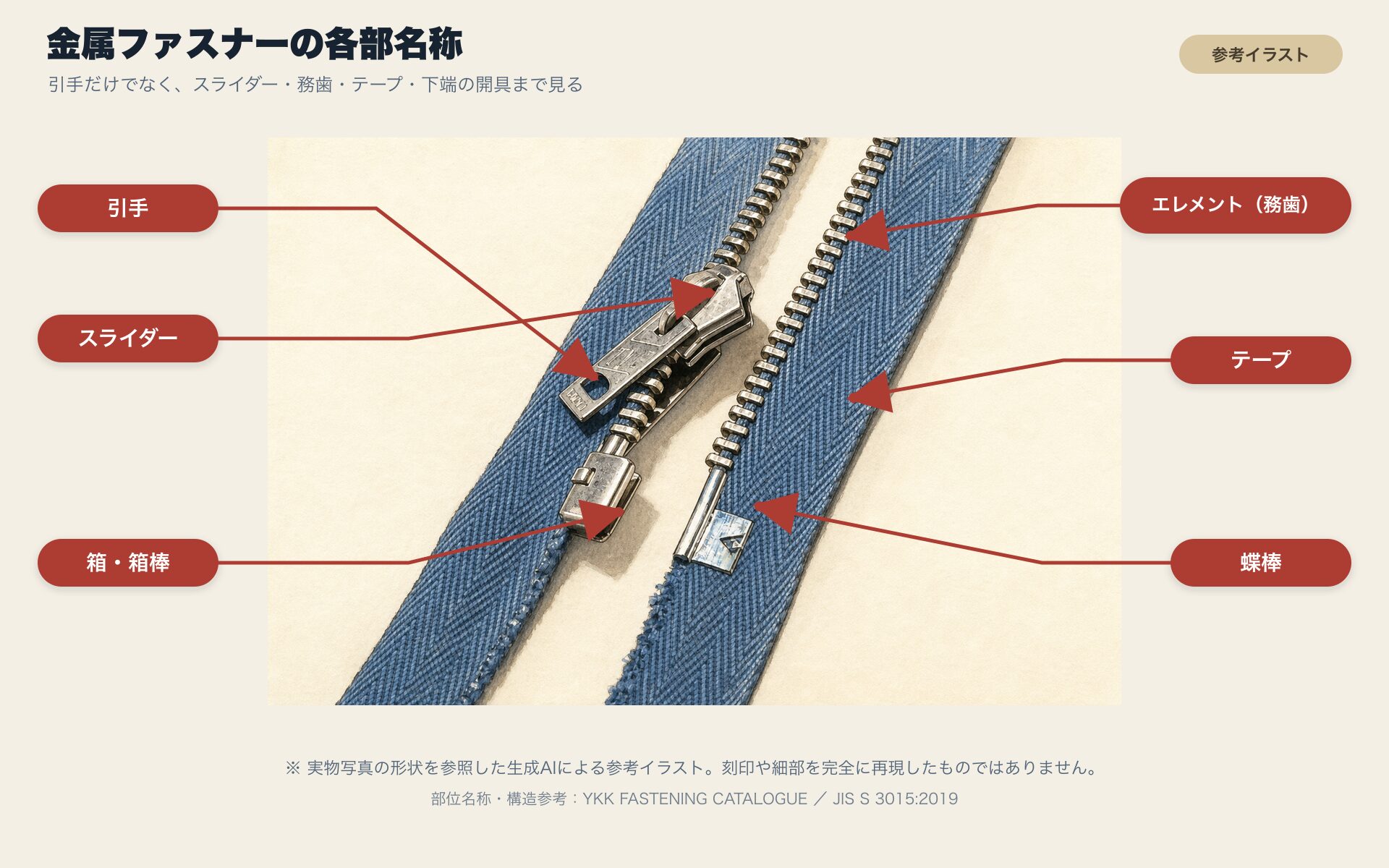
| Part | What to record |
|---|---|
| Pull | Mark, shape, lettering on both faces and metal colour |
| Slider | Butterfly or rotating structure; relationship to the pull |
| Elements / teeth | Metal, size, shape and wear |
| Tape | Material, colour and how it is sewn into the body |
| Box and pin | Lower separating mechanism, shape and fit |
Marks seen on vintage Japanese sukajan
| Mark | Name commonly given in Japanese references | Observed types |
|---|---|---|
| YKK | Yoshida Kogyo | Butterfly and rotating |
| TTS | Tokyo Teranishi | Butterfly and rotating |
| SPEED | Kawagen | Butterfly and rotating |
| CHERRY | Sakura Metal | Butterfly examples |
| Mitsuwa | Tsuda | Butterfly examples |
Other marks reported in Japanese vintage references include No.1, YA, OFS, STF, TOYO, CN and NBK. Some expanded company names and operating dates are difficult to verify in primary records, so treat the mark first as an observed component—not a precise year.
“YKK means modern” is a mistake
YKK’s official history traces its predecessor to 1934 and records use of the YKK trademark from 1946. A separate company source records Japanese trademark registration in 1953. Use of a mark and legal registration are not the same event.
Period garments attributed to the 1950s also survive with YKK butterfly zippers. A YKK pull does not automatically make a jacket a later reproduction.
Three-step dating method
1. Record the mark and mechanism
Photograph both faces of the pull and identify butterfly or rotating construction. Compare letter shape and pull outline, not only the brand name.
2. Check the complete installation
Look for a coherent combination of slider, teeth, tape, box and pin. Extra stitch lines or a dramatically newer component may indicate repair, but a replaced zipper does not make the jacket fake.
3. Compare it with the whole garment
Cross-check the zipper against fabric, ribs, pockets, lining, embroidery, place names and dates. The zipper should support the larger historical reading, not replace it.
Reproductions can use vintage-style hardware
Modern reproduction makers recreate butterfly pulls, cotton tape and early separating mechanisms. Tailor Toyo has documented reproduction zippers based on TTS, SPEED and CHERRY examples. Old-looking hardware alone is therefore not proof of a period jacket.
Primary and visual references
- YKK corporate history
- YKK Fastening Catalogue
- Tailor Toyo: reproduction butterfly zipper
- ROUTE44 archive of Japanese zipper marks
This guide explains an observation method. It cannot authenticate or assign an exact manufacturing year to an individual jacket.